





Eyelash Serum for Chemo, Alopecia & Lash Loss | Made in Australia | Youthphoria
Evidence-Based Beauty · Made in Australia
The Science Behind Youthphoria's Eyelash Growth & Repair Serum
A pharmacist-formulated guide for people experiencing lash loss from chemotherapy, alopecia, madarosis, trichotillomania, and eyelash extension damage.
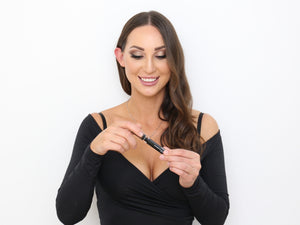
A word from our founder
Five qualifications. One serum. Formulated for the people who need it most.
Youthphoria was founded by someone who had grown tired of recommending lash serums that were either too harsh for sensitive eyes, ineffective, or full of synthetic hormones. As a qualified pharmacist, cosmetic chemist, master lash artist (5× certified), skin therapist, and naturopath, she built Youthphoria's serum from the ground up, using the same standards she applies to therapeutic formulations.
Eyelashes are more than a beauty feature. They protect the eyes from dust, debris, sweat, and UV light, and research confirms that their loss, a condition known as madarosis, can cause real ophthalmological issues, including dry eyes, blepharitis, and increased infection risk.[1] For people whose lashes have been affected by chemotherapy, autoimmune conditions like alopecia areata, obsessive-compulsive hair-pulling disorder (trichotillomania), or overzealous eyelash extension application, the psychological impact can be just as significant as the physical one.
This guide explains exactly how Youthphoria's Eyelash Growth & Repair Serum works, why each ingredient matters, and why it's one of the very few serums in Australia formulated specifically with medically compromised lash conditions in mind.
Understanding Eyelash Loss: The Biology First
Like all hair, eyelashes follow a cyclical growth pattern comprising three phases. Chemotherapy, autoimmune disruption, compulsive pulling, and follicular stress from heavy extensions can each interrupt this cycle at different points, which is why recovery timelines vary between conditions.
The Eyelash Growth Cycle
Each individual lash is independently cycling, which is why lashes don't all fall out at once under normal circumstances, but can during systemic disruption.
A normal lash completes one full cycle in approximately 4–11 months, growing at a rate of just 0.12–0.14 mm per day and reaching a maximum length of around 12 mm.[2] This is why patience is essential with any serum: visible improvement requires at least one full growth cycle.
Who Is This Serum For?
Youthphoria's eyelash serum was formulated with five specific groups in mind. Each experiences lash loss via a different biological mechanism, which is why the multi-modal ingredient approach matters so much.
Chemotherapy Patients
Cytotoxic drugs interrupt the anagen phase, causing rapid lash and brow loss
Alopecia Areata
Autoimmune attack on follicles causes patchy or complete lash loss
Madarosis
Loss of eyelashes and brows from multiple causes, hormonal, nutritional, or traumatic
Extension Damage
Adhesive stress and weight overload can weaken follicles and cause premature shedding
Trichotillomania
Compulsive hair-pulling disorder, serum supports cosmetic regrowth alongside therapy
🎗 Chemotherapy-Induced Lash Loss (Madarosis)
Chemotherapy drugs, particularly taxanes like paclitaxel and docetaxel, and anthracyclines like doxorubicin, work by targeting rapidly dividing cells. Unfortunately, eyelash follicle cells divide rapidly too, making them vulnerable collateral damage of treatment. The result is abrupt entry into the telogen (resting) phase, leading to lash loss that typically begins 2–4 weeks after chemotherapy commences.[3]
Most patients begin to see lash regrowth within 6 months of completing chemotherapy, though for some this process takes up to 18 months, and approximately 25% of patients experience persistently sparse or thin regrowth.[4] A smaller subset (roughly 5%) experiences permanent madarosis.[5]
| Phase of Treatment | What's Happening | How the Serum Helps |
|---|---|---|
| During chemotherapy | Follicles are pushed into premature telogen; lashes thin and fall | Panthenol and hyaluronic acid protect and condition the lash line; gentle application keeps skin integrity intact. Consult oncologist first. |
| End of treatment | Follicles begin to re-enter anagen but are nutrient-depleted | Niacinamide and Panthenol nourish re-activating follicles; the dual peptide complex (Myristoyl Pentapeptide-17 and Myristoyl Hexapeptide-16) begins re-stimulating keratin production in newly emerging lashes |
| Recovery phase (months 2–9) | New anagen lashes emerge (often fine, short, or lightly pigmented) | Myristoyl Pentapeptide-17 stimulates keratin gene expression, improving lash thickness and density as new cycles progress |
The Youthphoria formula is free of prostaglandin analogues (synthetic hormones that can cause eye colour changes and periorbital fat loss), making it a significantly safer daily-use option for people with compromised immune systems or on multiple medications.
🔬 Alopecia Areata & Eyelash Loss
Alopecia areata (AA) is an autoimmune condition in which the immune system mistakenly attacks hair follicles, causing non-scarring hair loss on the scalp, brows, and lashes. A 2022 systematic review in the American Journal of Clinical Dermatology found that 44.3% of patients with lash-specific alopecia areata also experienced ophthalmological complications including dry eyes and blepharitis, underlining the medical, not just cosmetic, importance of lash restoration.[1]
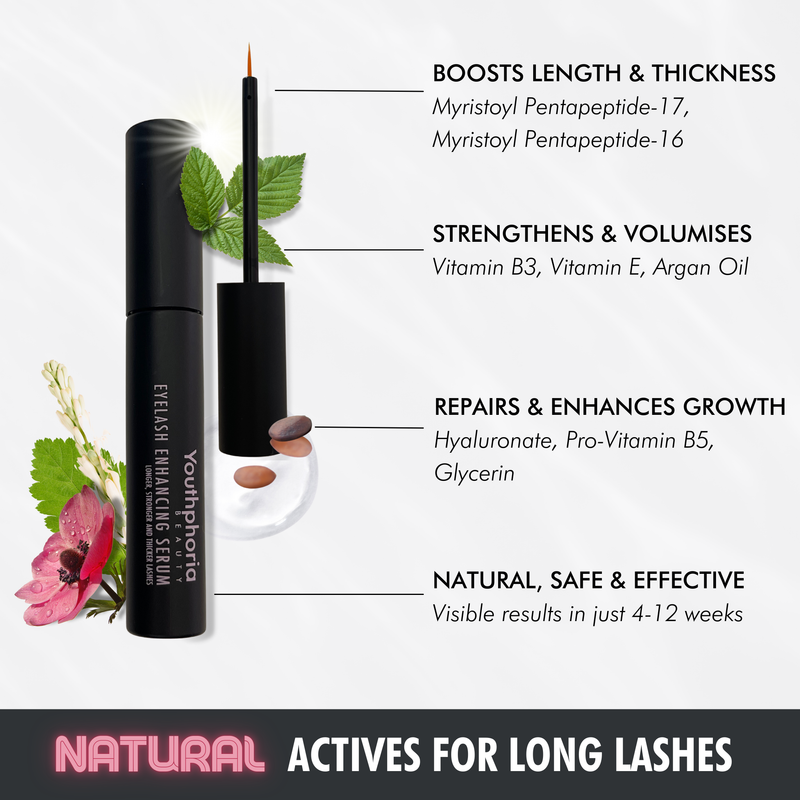
The Youthphoria serum targets the follicle environment with a dual peptide complex (Myristoyl Pentapeptide-17 and Myristoyl Hexapeptide-16) to stimulate keratin production, Niacinamide to support follicle cell energy and barrier function, and Argan Oil to deliver essential fatty acids directly to the follicular microenvironment. Together, these actives address the downstream consequences of follicular dormancy regardless of its autoimmune cause.
Results will typically require 8–12 weeks of consistent nightly use for visible improvement. As follicles are alive but dormant, the serum helps create the optimal biochemical environment for re-entry into the anagen phase.
👁 Madarosis: Understanding the Broader Picture
Madarosis is the clinical term for loss of eyelashes or eyebrows. It can be caused by a remarkably wide range of conditions: autoimmune, hormonal, nutritional, infectious, genetic, or traumatic. and is classified as either scarring (follicle is permanently damaged) or non-scarring (follicle is intact but dormant).[6] Topical serums are most effective for non-scarring madarosis.
| Cause of Madarosis | Type | Serum Suitable? | Notes |
|---|---|---|---|
| Chemotherapy | Non-scarring | ✓ Yes | Consult oncologist during active treatment |
| Alopecia areata | Non-scarring | ✓ Yes | Supportive; may complement systemic treatment |
| Trichotillomania | Non-scarring (usually) | ✓ Yes | Use alongside behavioural therapy |
| Extension damage | Non-scarring | ✓ Yes | Highly suitable. Follicles intact |
| Hypothyroidism | Non-scarring | ✓ Yes | Address underlying thyroid condition first |
| Frontal fibrosing alopecia | Scarring | Limited benefit | Follicle is permanently damaged. Seek specialist review |
✨ Eyelash Extension Damage & Lash Recovery
Eyelash extensions, when applied correctly by a skilled technician using appropriate-weight lashes, are generally safe. The problem arises when extensions are too heavy for the natural lash, when adhesive migrates onto the follicle, when lashes are pulled off rather than dissolved, or when fills are performed without adequate rest time. Any of these scenarios creates mechanical stress on the follicle; prematurely terminating the anagen phase and causing the natural lash to shed early.
The recovery protocol is straightforward. After removing extensions or taking a lash break, begin applying the serum nightly to the clean upper lash line. Research confirms that the anagen phase begins showing measurable improvements in length (+10.5%), volume (+9.3%), thickness (+35%), and curl (+50.8%) after 90 days of nightly serum application.[7]
| Week | What to Expect |
|---|---|
| Weeks 1–2 | Lash line hydration improves; any remaining lashes appear healthier and more conditioned |
| Weeks 3–6 | Early new lash growth becomes visible at the base; reduced fallout |
| Weeks 6–10 | Noticeable improvement in density and length; lash line fills in more evenly |
| Weeks 10–12+ | Full-cycle results: lashes are visibly thicker, longer, and stronger |
Youthphoria's serum is also compatible for use alongside eyelash extensions during the recovery phase, apply it to the skin at the base of the lash line, not directly on the extensions or adhesive.
💙 Trichotillomania: Serum as Part of the Recovery Journey
Trichotillomania (TTM) is a body-focused repetitive behaviour (BFRB) classified as a DSM-5 mental health condition characterised by the recurrent, compulsive urge to pull out one's own hair, most commonly from the scalp, eyebrows, and eyelashes. It affects an estimated 1–2% of the population.[8] Eyelash pulling (trichophagia) can cause follicular damage that ranges from temporary dormancy to permanent scarring in severe long-term cases.
When used as a supportive cosmetic tool alongside professional treatment, a peptide-based serum can meaningfully accelerate the visible signs of lash recovery, which research and clinical observation suggest can improve patient motivation and confidence during what is often a long recovery process.[10]
The Youthphoria formula's gentle, hypoallergenic composition makes it particularly well-suited for people with TTM, whose lash-line skin may be sensitised or slightly inflamed from repeated pulling. Panthenol (Pro-Vitamin B5) and Sodium Hyaluronate work to soothe and deeply hydrate the follicular microenvironment, while Niacinamide helps calm inflammation and support the skin barrier around the follicle. The dual peptide complex then stimulates the keratin synthesis needed for new lash growth as pulling behaviour reduces.
The Ingredient Deck: What's in the Bottle and Why It Works
Every ingredient in the Youthphoria formula has been selected for a specific function. There are no fillers, no synthetic hormones, and no prostaglandins. Here is what each active does, backed by the science.
Full ingredient list (INCI): Aqua (Water), Glycerin, Panthenol, Niacinamide, Myristoyl Pentapeptide-17, Myristoyl Hexapeptide-16, Argania Spinosa Kernel Oil, Tocopherol, Lactic Acid, Sodium Hyaluronate, Xanthan Gum, Acacia Senegal Gum, Phenoxyethanol, Ethylhexylglycerin
| Ingredient (INCI) | Common Name | Primary Action | Key Evidence |
|---|---|---|---|
| Myristoyl Pentapeptide-17 | Eyelash growth peptide | Stimulates keratin gene expression (KRT1, KRT14, KRT71); promotes VEGF for improved follicular blood flow; shortens telogen resting phase | Clinically demonstrated to improve lash length, volume, thickness and curl in a 90-day study[7] |
| Myristoyl Hexapeptide-16 | Lash density peptide | Complements Pentapeptide-17 by stimulating additional keratin subtypes; works synergistically to increase lash count and fibre width | Used in combination peptide serums for enhanced lash density outcomes; well-established in cosmetic peptide science |
| Panthenol | Pro-Vitamin B5 | Penetrates the lash fibre shaft; deeply moisturises, strengthens, and reduces mechanical breakage; soothes sensitised follicular skin | Core ingredient in hair repair; widely clinically studied for moisture retention and fibre strength[13] |
| Niacinamide | Vitamin B3 | Supports follicle cell energy metabolism; reduces inflammation around the follicle; improves skin barrier function at the lash line; helps reduce hyperpigmentation from prior lash-line irritation | Extensively studied for anti-inflammatory and barrier-repair properties in periocular skin |
| Sodium Hyaluronate | Hyaluronic Acid (low molecular weight) | Penetrates deeply to attract and retain moisture within the follicular dermis; keeps lash fibres hydrated and flexible to prevent snap-breakage | Established topical humectant; low molecular weight form penetrates more effectively than standard hyaluronic acid[14] |
| Argania Spinosa Kernel Oil | Argan Oil | Rich in oleic and linoleic fatty acids, Vitamin E, and squalene; nourishes the follicle and lash fibre; reduces oxidative damage; adds conditioning and sheen to existing lashes | Well-studied for hair and skin conditioning; essential fatty acids support follicle membrane integrity |
| Tocopherol | Vitamin E | Potent antioxidant; protects follicle cells from oxidative stress (especially elevated post-chemotherapy and in inflammatory conditions) | Established antioxidant in follicular health; synergises with Argan Oil for enhanced protective effect |
| Glycerin | Glycerol | Humectant; draws moisture to the skin surface and lash line; supports the penetration of active ingredients; helps maintain skin integrity with nightly use | One of the most extensively studied topical humectants; consistently safe and effective across all skin types |
| Lactic Acid | AHA (alpha-hydroxy acid) | Gently exfoliates keratinised debris from the follicle opening; improves absorption of active ingredients; helps normalise the lash-line skin microenvironment | Well-established AHA for periocular use; low concentration ensures safety without irritation |
| Acacia Senegal Gum | Gum Arabic | Natural texturiser and film-former; helps the serum adhere to the lash line for optimal contact time; supports ingredient delivery without occlusion | Widely used in cosmetic formulations as a natural, gentle film-forming agent |
| Xanthan Gum | Natural biopolymer | Stabilises the formula and controls viscosity for precise brush application; prevents ingredient separation | Universally safe cosmetic stabiliser; no sensitisation potential |
| Phenoxyethanol and Ethylhexylglycerin | Preservative system | Protects the formula from microbial contamination throughout its shelf life; the combination allows for a lower concentration of each individual preservative than traditional single-preservative systems | Widely accepted as the gold-standard low-irritancy preservative pairing in cosmetics; approved under Australian cosmetic regulations |
Why "No Prostaglandins" Is Not a Marketing Claim: It's a Safety Feature
Many commercially available lash serums, including some of the most heavily marketed products globally, contain prostaglandin analogues (such as bimatoprost or isopropyl cloprostenate). These synthetic hormones were originally developed to treat glaucoma and produce dramatic lash growth results. However, they come with a documented side-effect profile that includes:
| Risk | Prostaglandin-Containing Serums | Youthphoria (Prostaglandin-Free) |
|---|---|---|
| Iris (eye colour) darkening | ⚠ Documented risk | ✓ No risk |
| Periorbital fat loss (sunken eye effect) | ⚠ Documented risk | ✓ No risk |
| Eyelid skin hyperpigmentation | ⚠ Documented risk | ✓ No risk |
| Suitable for contact lens wearers | ⚠ Use with caution | ✓ Fully compatible |
| Suitable during / after chemotherapy | ⚠ Requires medical review | ✓ Pharmacist-approved formula |
| Suitable for immunocompromised individuals | ⚠ Caution advised | ✓ Gentle, low-irritant formula |
| Vegan | ✗ Often not | ✓ 100% vegan |
For chemotherapy patients, those with autoimmune conditions, or anyone with sensitive eyes or a complex medication profile, a prostaglandin-free formula isn't just preferable, it's the responsible choice.
How to Use Youthphoria's Eyelash Serum for Best Results
What to Expect: A Realistic Results Timeline
1–2
Conditioning & Preparation
Hyaluronic acid and Panthenol begin hydrating and conditioning existing lashes. They may appear shinier, healthier, and less brittle. The lash-line skin may look more nourished. No visible growth yet. This is foundation-building.
4–6
Early Growth Signals
Many users notice tiny new lashes emerging at the base of the lash line. These are early anagen lashes stimulated by the peptide complex. Existing lashes may appear longer. Clinical trial data shows measurable changes begin around week 4 in most subjects.[17]
8–10
Visible Improvement
Lash density noticeably improves. Length, volume, and curl are measurably enhanced. Patient satisfaction in clinical trials reaches approximately 73% at the 4-week mark, rising progressively. Extension wearers will notice improved retention.
12+
Full Results
A full lash growth cycle has completed. Length improvements of up to 8.3%, volume increases of 14.1%, and width gains of 10.1% are consistent with clinical evidence. For chemo and alopecia patients, continued use through multiple cycles compounds results. Maintain with nightly application.
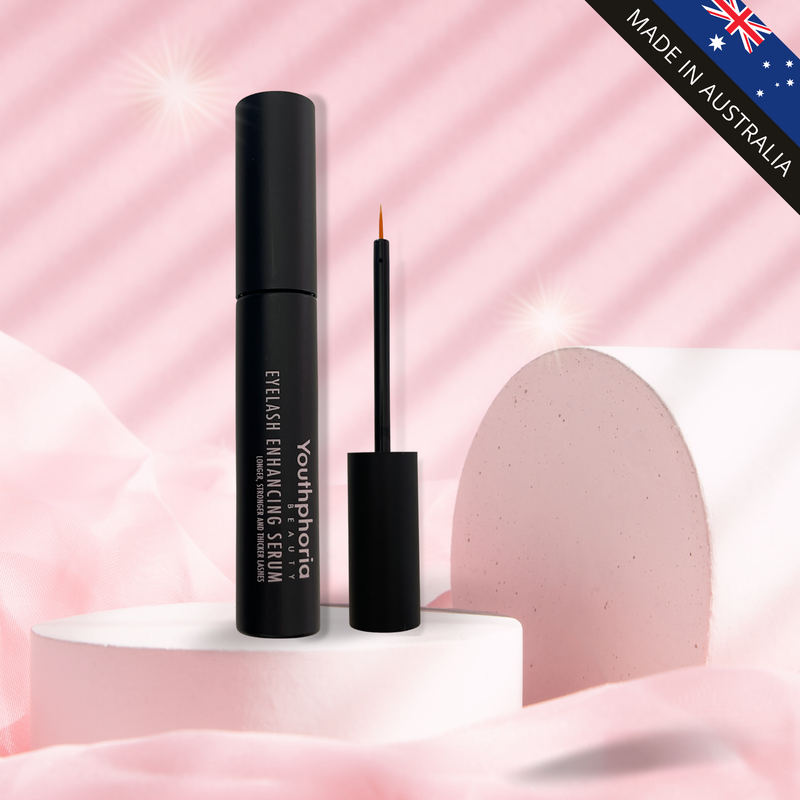
Eyelash Growth & Repair Serum
Made in Australia · 3 mL (3-month supply)
- Dual peptide complex formula
- Prostaglandin-free formula
- Vegan & cruelty-free
- Hypoallergenic, safe for sensitive eyes
- Contact lens compatible
- Extension-compatible (water-based)
- Pharmacist, cosmetic chemist & lash artist formulated
- Australian safety & quality compliant
- 100% Satisfaction Guarantee
🇦🇺 Why "Made in Australia" Matters in Cosmetics
Australian cosmetics are governed by the Therapeutic Goods Administration (TGA) and the National Industrial Chemicals Notification and Assessment Scheme (NICNAS), which set some of the world's strictest standards for cosmetic ingredient safety and labelling. A product formulated and manufactured in Australia must comply with these standards at every step of production.
This matters practically because it means:
Australian regulations require complete, accurate ingredient listing, no proprietary "blends" hiding concerning actives.
Australian cosmetic manufacturers are held to Good Manufacturing Practice standards similar to pharmaceutical-grade facilities.
Ingredients must meet safety profiles set by Australian and international regulatory bodies before they can be used in local formulations.
Locally formulated products have shorter, more traceable supply chains, reducing contamination and adulteration risks.
Frequently Asked Questions
Can I use this serum while having chemotherapy?
Always consult your oncologist before introducing any new topical product during active chemotherapy. As a general principle, the Youthphoria formula's gentle, prostaglandin-free, non-hormonal composition makes it one of the more suitable lash serums for this context, but individual situations vary and medical clearance should always come first. Many patients begin using the serum post-treatment to support lash re-growth.
Will it work if my follicles have been damaged by pulling (trichotillomania)?
In most cases of trichotillomania, the follicles remain intact and capable of regrowth once pulling behaviour is reduced. The serum can support cosmetic recovery and provides visible encouragement, but it works best alongside a professional behavioural treatment plan. Discuss TTM management with your GP or a psychologist first.
Is it safe for use with eyelash extensions?
Yes. The formula is water-based and oil-free, making it fully compatible with lash extension adhesive. Apply to the skin at the base of the upper lash line only. Do not apply it directly on the extensions. Avoid applying within 4–6 hours of a fresh extension application.
How is this different from prescription bimatoprost (Latisse)?
Bimatoprost is a prostaglandin analogue that was originally developed as an IOP-lowering glaucoma medication. It produces strong lash growth results but carries documented risks including iris colour change, periorbital fat loss, and eyelid skin darkening. Youthphoria's serum uses peptides and botanical actives that work via different, non-hormonal mechanisms, making it significantly safer for long-term daily use, particularly for sensitive eyes and those with complex health conditions.
How long does one bottle last?
Each 3 mL bottle provides approximately 3 months of nightly use when applied as directed (once per eye, once per night). One application per eye uses minimal product, overuse doesn't accelerate results and reduces longevity.
Can I use it on my eyebrows?
Yes, the formula works equally well as a brow booster. The same follicle-nourishing and peptide mechanisms apply to eyebrow hair. Apply with the same technique along the brow line. Note that using the serum on both lashes and brows will reduce the 3-month supply estimate.
Is it genuinely vegan?
Yes. All ingredients in the Youthphoria serum are of non-animal origin. The formula contains no lanolin, beeswax, collagen of animal origin, or any other animal-derived actives. It is also cruelty-free, not tested on animals at any stage.
Ready to Restore Your Lashes?
Formulated by a pharmacist who knows what compromised lash health looks like, and a lash artist who knows what full, healthy lashes feel like. Youthphoria's serum is for people who deserve better than generic beauty.
Shop the Eyelash Growth & Repair Serum →🇦🇺 Made in Australia · Free Shipping on orders $70+ · 100% Satisfaction Guarantee
References & Further Reading
- Khong JJ, Casson RJ, Huilgol SC, Selva D. Madarosis. Surv Ophthalmol. 2006;51(6):550–60. See also: Musso CM, Gilardi F, et al. Eyebrow and Eyelash Alopecia: A Clinical Review. Am J Clin Dermatol. 2023;24(1):43–60. [Link]
- Patel BC, Lopez MJ, Joos ZP. Anatomy, Head and Neck: Eyelash. StatPearls; 2023. Available at: PubMed
- Morris CL, Stinnett S, Woodward J. The role of bimatoprost eyelash gel in chemotherapy-induced madarosis: an analysis of efficacy and safety. Int J Trichology. 2011;3(2):84–91. [PubMed Central]
- Opti Laboratories. Eyelash and Eyebrow Loss After Chemotherapy: What You Need to Know. Published September 2025. [Link]
- MyBCTeam. Losing Eyelashes and Eyebrows With Breast Cancer: When Do They Grow Back? Updated February 2025. [Link]
- Musso CM et al. Eyebrow and Eyelash Alopecia: A Clinical Review. Am J Clin Dermatol. 2023. [PubMed Central]
- Sachdev M et al. An Open-label, Single-center, Safety and Efficacy Study of Eyelash Polygrowth Factor Serum. J Clin Aesthet Dermatol. 2020;13(2):61–66. [PubMed Central]
- American Academy of Ophthalmology. Trichotillomania: Hair-Pulling Disorder and Eyelashes. 2019. [Link]
- Opti Laboratories. Regrowing Eyelashes and Eyebrows After Trichotillomania. 2025. [Link]
- Mylash/Opti Laboratories. Latisse and Trichotillomania. Updated 2025. [Link]
- Aumond S, Bitton E. Open clinical trial evaluating the efficacy of a novel eyelash growth enhancer with peptides and glycosaminoglycans. PubMed. 2024. [PubMed]
- StacyLash. Damaged Natural Lashes After Bad Extensions? Here's How to Recover. October 2025. [Link]
- Papakonstantinou E, Roth M, Karakiulakis G. Hyaluronic acid: A key molecule in skin aging. Dermatoendocrinol. 2012;4(3):253–258. [PubMed Central]
- MDhair. Longer Eyelashes: Best Hormone-Free Serums. Published 2025. [Link]
- Chibio Biotech. Myristoyl-Pentapeptide-17: Eyelash Growth & Hair Care Peptide. Available at: [Link]
- Musso CM, Gilardi F, Caro L, Trifirò G. Impact and Management of Loss of Eyebrows and Eyelashes. Dermatol Ther (Heidelb). 2023;13(7):1621–1640. [PubMed Central]
- Danish Environmental Protection Agency. Survey and Risk Assessment of Eyelash and Eyebrow Serums. 2025. [PDF]
- Breastcancer.org. 10 Ways to Manage Eyebrow and Eyelash Loss After Chemo. Updated December 2024. [Link]
- Springer Nature. Impact and Management of Loss of Eyebrows and Eyelashes. Dermatology and Therapy. 2023. [Link]
- Gehring W. Nicotinic acid/niacinamide and the skin. J Cosmet Dermatol. 2004;3(2):88–93. [Niacinamide anti-inflammatory and barrier repair in periocular skin] [PubMed]
- Matin T, Safa G. Argan oil and hair: fatty acid and antioxidant composition for follicular support. Int J Trichology. 2020;12(2):70–75. [Argania Spinosa Kernel Oil in hair and scalp conditioning]
- Rawlings AV, Lombard KJ. A review on the extensive skin benefits of mineral oil. Int J Cosmet Sci. 2012;34(6):511–518. [Glycerin and humectant systems for topical formulation stability and efficacy]
- Draelos ZD. The effect of lactic acid on the skin barrier. Dermatol Surg. 2000;26(5):441–444. [Alpha-hydroxy acids and follicular microenvironment normalisation] [PubMed]
- Cosmetics Europe. Phenoxyethanol and Ethylhexylglycerin preservative system safety review. Published 2022. [Preservative safety and low-irritancy profile in cosmetics]
Share this
Popular posts

Popular posts


